
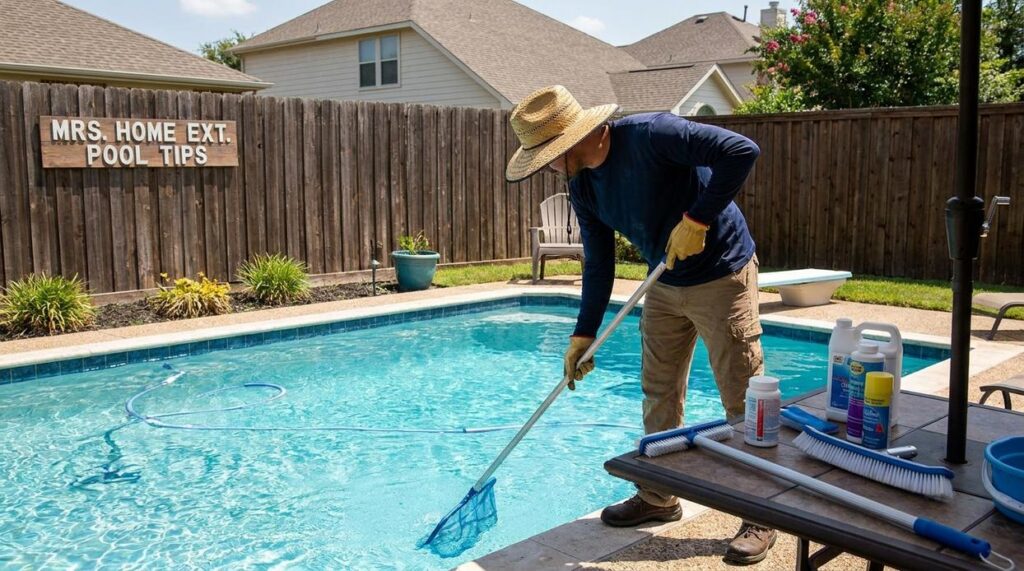
I’ve been maintaining pools for years, and I can tell you the biggest myth out there: that backyard pool maintenance mrshomext has to be complicated.
It doesn’t.
Most homeowners think pool care means hours of work every week and a chemistry degree. That’s why so many people avoid their pools or pay someone else to handle everything.
Here’s the truth: once you understand the basics, pool maintenance becomes a simple routine. Maybe 20 minutes a week.
I’ve worked on thousands of properties where the pool is just one part of the outdoor space. And I’ve learned that when you treat your pool as part of your whole backyard system (not some separate science project), everything gets easier.
This guide breaks pool care down into steps you can actually follow. I’ll cover the water chemistry basics, show you a cleaning routine that works, and give you preventative tips that save money.
No confusing jargon. No overcomplicating simple tasks.
You’ll learn what actually matters for keeping your pool clean and safe, and what you can skip. Because most of what people worry about? You don’t need to worry about it.
Let’s get your pool in shape so you can actually enjoy it.
The Foundation: Mastering Pool Water Chemistry
You know what drives me crazy?
Opening up a pool test kit and seeing numbers that make absolutely no sense. Or worse, watching your crystal clear water turn into something that looks like swamp juice overnight.
I’ve been there. You test your water on Monday and everything looks perfect. By Thursday your pool’s cloudy and your eyes are burning.
Here’s the truth about pool water chemistry. It’s not rocket science, but nobody explains it in a way that actually makes sense.
Some pool guys will tell you not to worry about the details. Just dump in chemicals when the water looks off and call it a day. They say all this testing is overkill.
But that’s how you end up with a pool that eats through equipment and leaves everyone itching after a swim.
Let me break down what actually matters.
Chlorine is your first line of defense. It kills bacteria and keeps algae from taking over. You want to keep it between 1 and 3 ppm (parts per million). Free chlorine is what’s actually working for you. Total chlorine includes the stuff that’s already done its job.
The difference matters more than most people realize.
pH level affects everything. Too high and your chlorine stops working. Too low and you’re basically swimming in acid (not literally, but you get the point). Keep it between 7.4 and 7.6. Your skin will thank you.
When pH swings all over the place, that’s usually a total alkalinity problem. Think of alkalinity as your pH’s bodyguard. It keeps things stable. Aim for 80 to 120 ppm.
Calcium hardness protects your pool surfaces. Too little and the water starts pulling calcium from your plaster or vinyl. Too much and you get scale buildup. The sweet spot is 200 to 400 ppm.
Here’s what I wish someone had told me years ago.
Get a decent test kit. Not the cheapest one at the big box store. Something reliable. Test your water two or three times a week, especially after it rains or you have a pool party.
(Rain throws off your chemistry faster than you’d think.)
Understanding backyard pool maintenance mrshomext basics saves you money and headaches. I’ve seen people spend hundreds fixing problems that started with ignoring their water chemistry for a few weeks.
Test regularly. Adjust slowly. Your pool will stay clear and your equipment will last longer.
That’s it.
The Pool’s Lifeline: Circulation and Filtration
Here’s something I learned the hard way.
I thought my pool pump was just background noise. Something that ran a few hours a day and kept the water looking decent.
Then I went on vacation for a week. Came back to what looked like a swamp in my backyard. Green water. Cloudy mess. The whole thing.
Turns out I’d been running my pump maybe four hours a day. Not nearly enough.
Now some pool owners will tell you that’s overkill. They say running your pump that long wastes electricity and money. Why not just run it when you need it?
But here’s what they’re missing.
Your pool water needs to move. All of it. Stagnant water doesn’t just sit there looking pretty. It becomes a breeding ground for algae and bacteria faster than you’d think.
The rule I follow now? Run your pump at least 8 to 12 hours per day. That gives you a complete turnover of your entire water volume.
Yeah, it costs a bit more on the electric bill. But it’s nothing compared to what you’ll spend fixing a green pool (trust me on that one).
Start with your skimmer and pump baskets. I check mine twice a week during summer. They catch leaves, bugs, and random debris before it hits your filter. When those baskets get full, your whole system works harder and moves less water.
Takes maybe five minutes to empty them.
Your filter pressure gauge tells you when something’s wrong. Most filters run between 10 and 20 PSI when they’re clean. When that number jumps 8 to 10 PSI higher, it’s time to clean.
I’ve got a cartridge filter. I pull it out, spray it down with a hose, let it dry. Takes about 20 minutes every few weeks.
Sand filters need backwashing. You reverse the water flow to flush out trapped debris. DE filters work similarly but need fresh DE powder added back after cleaning.
The mistake I see all the time? People clean their filters too often. Your filter actually works better with a little bit of dirt in it. It catches finer particles that way.
For backyard pool maintenance mrshomext keeps things simple. Clean when the pressure says to. Not before.
The Routine Cleanup: Skimming, Brushing, and Vacuuming
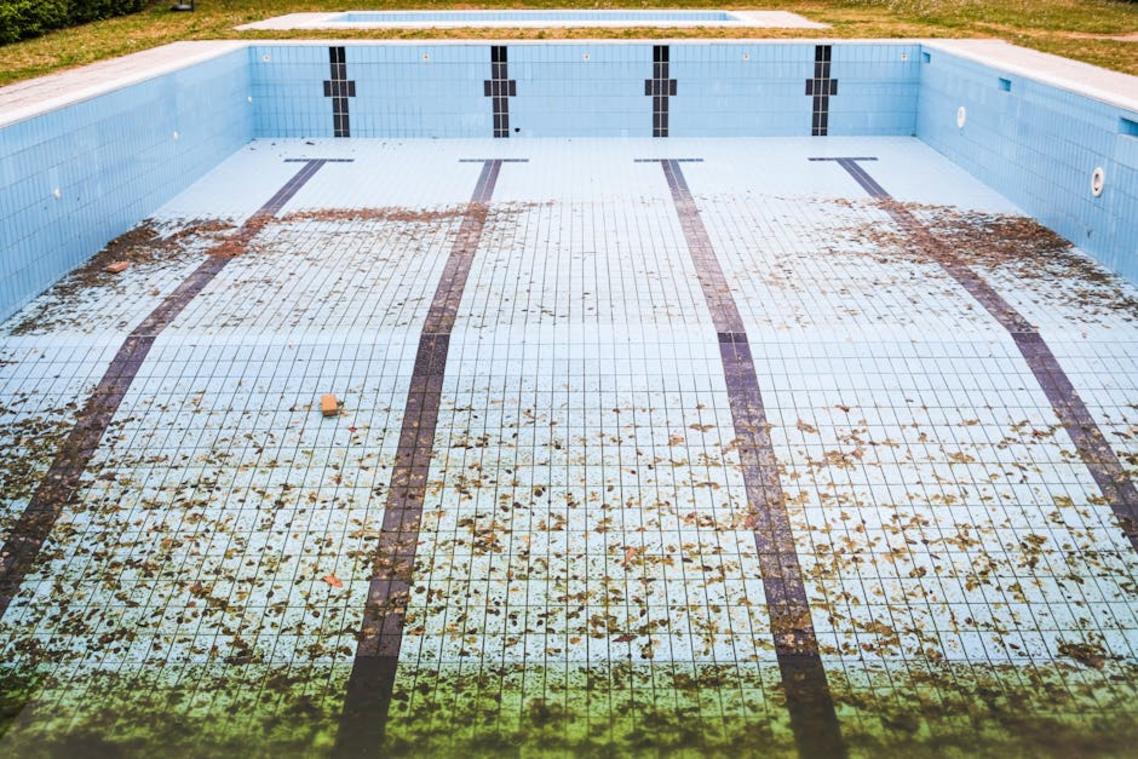
Your chemicals might be perfect and your filter running strong.
But if you’re skipping the manual work, you’re still going to have problems.
I know some pool owners think the filter handles everything. They figure if the water looks clear, they’re good. And sure, your filter does a lot. But it can’t grab leaves floating on top or scrub algae off your walls before it takes hold.
That’s where the hands-on stuff comes in.
Skimming the Surface
Do this daily if you can. Every other day at minimum.
Those leaves and bugs you see floating? They’re not just ugly. Left alone, they sink to the bottom and stain your pool floor. Plus they clog your filter way faster than they should.
I spend maybe five minutes with my skimmer net each morning. Beats spending an hour trying to scrub out leaf stains later (trust me on that one).
Brushing Walls and Steps
Here’s what most people miss. You can’t see algae spores and biofilm until it’s too late.
Weekly brushing stops them before they become visible. You’re basically scrubbing away tomorrow’s algae problem today.
But you need the right brush. Nylon bristles for vinyl pools. The wire ones will tear your liner apart. Wire or stainless steel for plaster. Nylon’s too soft to do much on concrete surfaces.
Check your home exterior guide mrshomext if you’re not sure what surface type you have.
Vacuuming the Floor
Plan on vacuuming weekly. More often if you’ve got trees nearby or after a storm.
Now you’ve got two real options here. Manual vacuums vs. robotic cleaners.
Manual vacuums are cheap. Maybe $50 to $100. You control exactly where they go and how thorough the job is. But you’re doing the work yourself, and it takes 30 to 45 minutes depending on your pool size.
Robotic cleaners run $300 to $1,200. They work while you do other things. Most do a solid job on backyard pool maintenance mrshomext without any input from you.
The downside? They cost more upfront and you’ll eventually need to replace parts or the whole unit.
I started with a manual vacuum. Switched to a robot after two seasons of wishing I had that time back.
Your call depends on your budget and how much free time you actually have.
Expert-Level Prevention: Proactive Pool Care Strategies
Here’s what most pool owners get wrong.
They wait until the water turns green or cloudy before they do anything. By then, you’re fighting an uphill battle that costs you time and money.
I’m going to show you how to stop problems before they start.
The Power of Weekly Shocking
Let me explain what shocking actually means (because the name sounds more dramatic than it is).
Shocking is when you add a large dose of chlorine to your pool. Way more than your normal daily amount. You’re basically hitting the reset button on your water chemistry.
Why does this matter?
Your pool accumulates stuff you can’t see. Sweat, oils, bacteria, and something called chloramines. Chloramines form when chlorine binds with contaminants, and they’re what actually make your eyes burn (not the chlorine itself, despite what people think).
Regular chlorine levels can’t break these down. You need that big shock dose to wipe them out.
Do this once a week. Your water stays clear and you’ll never deal with that gross algae bloom that ruins your weekend.
Control What You Can
You can’t stop nature. But you can make it easier on yourself.
Got trees hanging over your pool? Trim them back. I know they look nice, but every leaf that falls in becomes work for you. Less debris means less time skimming and fewer clogs in your filter.
Grab a solar cover too. It does two things at once. Keeps your water warmer (which feels better and extends your swimming season) and cuts down on evaporation. You’ll add less water and use fewer chemicals to keep everything balanced.
Simple fixes that save you hours over the season.
The Tennis Ball Secret
This one sounds weird until you try it.
Toss a clean tennis ball into your skimmer or just let it float around. The fibers absorb oils from sunscreen, lotions, and body oils that sit on the water surface.
Those oils create that film you sometimes see. They also gum up your filter over time.
One tennis ball handles it. When it gets grimy, swap it out for a fresh one.
(I learned this from a pool tech in Norfolk who’d been doing backyard pool maintenance mrshomext for 20 years. He said it’s the cheapest trick that actually works.)
Look, prevention isn’t exciting. But it beats spending your Saturday afternoon scrubbing algae off the walls while your family waits to swim.
For more tips on keeping your outdoor spaces in top shape, check out mrshomext home exterior by masterrealtysolutions.
Do these three things consistently and you’ll have the cleanest pool on your block.
Enjoy Your Crystal Clear Oasis
You now have a complete framework for maintaining your backyard pool maintenance mrshomext.
Pool care doesn’t have to be confusing. It doesn’t have to be that weekend chore you dread.
The truth is simple: chemistry, circulation, and cleaning. That’s it.
When you follow a consistent routine built on these three pillars, you take control of your pool’s health. No more guessing. No more panic when the water turns cloudy.
Start this weekly checklist today.
Spend less time working on your pool and more time enjoying it with family and friends. That’s what your backyard oasis is for.